Speech pathology

You record the example, they practise against it.

You record the sound the way it should be heard — your mouth, your voice. That clip is what the patient copies at home, as often as needed. The patient records each attempt, and every take comes back to you.

The example

The card carries the model: audio and video.

Record the target pronunciation yourself. The patient sees the mouth and hears the sound on the same card — that is what the patient copies and tries to reproduce, without you having to be in the room.

/s/ blends — "strawberry"

×/d2
×/wk7
Patient takes · 3/52
5 Aug · 0:04
3 Aug · 0:03
3 Aug · 0:04

Lingual elevation — /l/

×/d3
×/wk7
Patient takes · 2/51
6 Aug · 0:05
4 Aug · 0:04
Progress

Every attempt, next to the last one.

The patient records the attempts and sends them. They stack up on the same card, so you can compare one take with the next and see whether the sound is moving — or decide the approach needs changing.
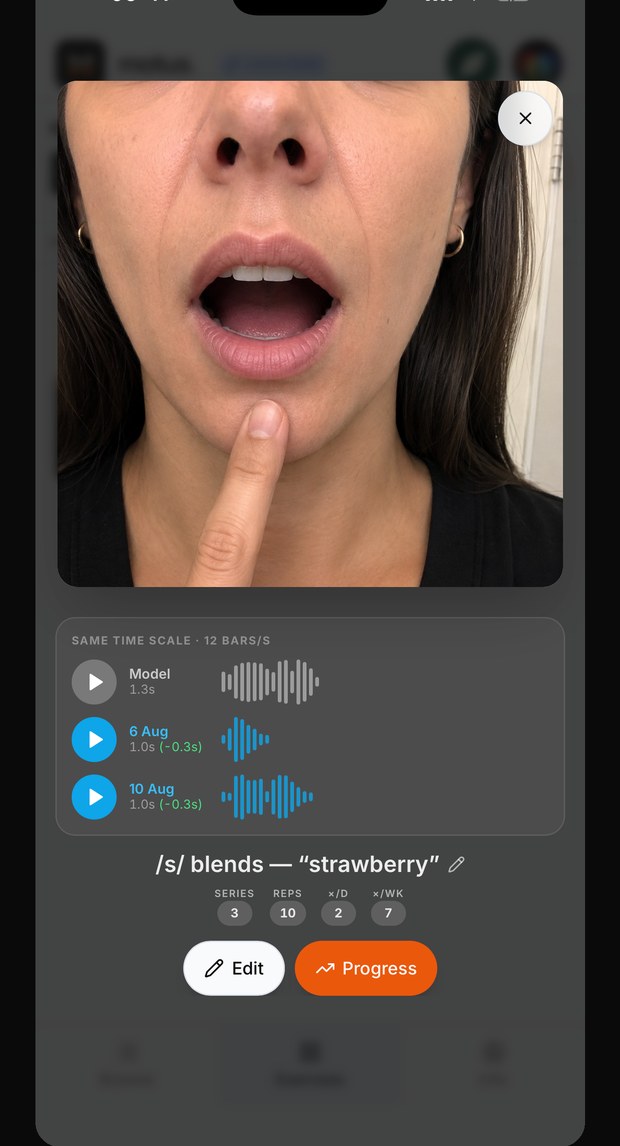
  • Each one dated and ready to play
  • Compare them with each other, and with your example
The comparison panel on a card: the clinician's example and two dated patient takes, each with its own play button.
How the rest works

The rest of Motus works the way it always does.

The discipline changes what you record, not how the practice runs.

The week you weren't there

Each practice the patient marks off, how hard it felt, and the takes recorded — all on the one card. You open the next session knowing what happened at home instead of asking.

Same portal

One QR or link. The patient opens it and finds your example waiting. No account, no app, no email.

Same seat

A seat is a seat. A clinic mixing speech, physio and OT pays for headcount, never per profession.

The pronunciation is the content.

Record it once and it guides every practice at home. For speech pathology, and for the rest of the clinic.